


Minor trauma and acute pain are some of the most common reasons children come to the emergency department. Managing that pain well is a clear priority for both clinicians and families, yet it’s often more difficult than it sounds.
In practice, pain in children is still frequently undertreated, and commonly used options like opioids can come with significant side effects, which may limit how and when they’re used (Eerdekens et al, 2019).
The findings from the PERUKI service evaluations were hard to ignore. Fewer than 60% of children arriving with minor injuries had any documented pain assessment at all. Reassessment was almost entirely absent.
Pain relief wasn’t reliably given either. Some children received appropriate analgesia, while others did not, with no clear consistency between sites. And when initial treatments weren’t enough, the decision to escalate to rescue analgesia varied widely depending on where the child was seen.
What is Penthrox?
Methoxyflurane is an inhaled anaesthetic that has the unique property of providing analgesic effects at low doses (Penthrox for Healthcare Professionals). Its onset is rapid, with analgesic effects within 2-5 minutes. Penthrox is a drug-delivery system that allows patients to self-administer inhaled medication and has superseded other systems, such as the Analgizer.
Why was this study needed?
The study was driven by a long-standing problem: there simply aren’t enough analgesic options officially approved for children. Too often, clinicians have had to lean on data borrowed from adult studies, with very little high-quality evidence tailored specifically to younger patients. This has meant it has been much harder to make confident, child-focused treatment decisions.
To address this gap, researchers launched the MAGPIE trial as part of an approved Paediatric Investigation Plan with the European Medicines Agency (EMA). In simple terms, this meant a carefully designed, forward-looking study aimed at gathering the right evidence on how safe and effective the treatment is for children. The results made a real impact – helping secure official approval for methoxyflurane to be used in kids aged six and up, expanding access to a much-needed option in paediatric care.
Methoxyflurane has long been used effectively and safely in Australia and New Zealand, in their EDs and pre-hospital settings, since the 1970s, in both adults and children.
By the late 2010s, Penthrox had become licensed for use in adults in most of Europe, based on increasing evidence supporting its use (Borobia et al., Ricard-Hibon et al., Mercadante et al.), but children were initially excluded from this due to a lack of robust trials in the paediatric population.
Gradually, based on decades of Australasian safety experience, Penthrox was used off-label in children and adolescents, and global licensing began to expand, but regulators in Europe and the UK still required formal trials in the paediatric population before any licensing was granted.
The STOP! The Trial (Study of Penthrox for Trauma Pain) paved the way for paediatric approval. It was a randomised, double-blind, placebo-controlled trial conducted across six sites in the UK, and, importantly, a third of the patients were adolescents aged 12-17 years. It demonstrated both efficacy and safety, showing that Penthrox significantly reduced pain severity (p<0.00001) compared with placebo and that any adverse reactions were mild and transient. However, it did not yield any data regarding younger children.
Enter… MAGPIE (Methoxyflurane AnalGesic for Paediatric InjuriEs).
Hartshorn, S., Barrett, M.J., Bloom, B., Lyttle, M.D., Walton, E., Steel, K., Yee, S.A., Irvine, A. and in the United, P.E.R., 2025. Treatment of acute trauma-related pain in children and adolescents with methoxyflurane (Penthrox®) compared to placebo (MAGPIE): A randomised clinical trial. Injury, p.112830.
This was a randomised, double-blind, multicentre, placebo-controlled study conducted throughout 11 EDs in the UK and Ireland.
Let’s take a look at the PICO.


Who were the patients?
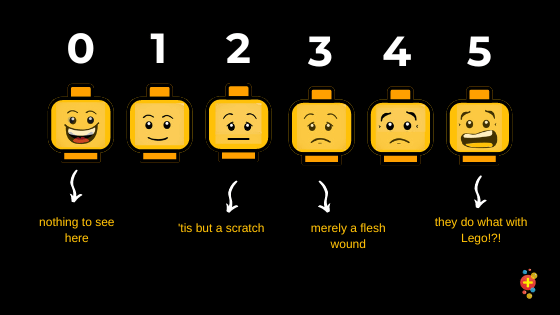
These were children aged 6 – <18 years old with minor trauma and acute moderate-to-severe pain. This was defined by a VAS (visual analogue score) of 60-80mm (which was later widened to 55-85mm to improve recruitment) or a Wong-Baker FACES (WBF) score of 6-8.
Minor trauma was “non-critical and non-limb threatening physical wound or injury of the tissues”.
Exclusion criteria included:
- Prior analgesia within 5 hours of randomisation, apart from:
– Entonox, which excluded the patient if used within 30 minutes;
– Diclofenac, which was an exclusion if used within 8 hours
– Oral morphine, which excluded the patient if used within 10 hours. - Evident respiratory depression
- History of liver damage
- History of renal impairment
What was the intervention?
This was 3 mL of methoxyflurane, delivered via the Penthrox inhaler and self-administered by the patient under the supervision of a research nurse.
Patients were randomised in a 1:1 ratio, stratified by age group (6-8 years, 9-11 years, 12-<18 years) to receive either methoxyflurane or the normal saline control. This was achieved using an interactive web response system (IWRS).
Blinding of the participant, research nurse, and clinical trial clinician was achieved by adding a few drops of methoxyflurane to the placebo inhaler wristbands to imitate its distinctive scent. Statisticians were blinded to treatment allocation.
Rescue medication was permitted at any time at the discretion of the treating team, in accordance with usual practice at that site. This included Entonox, intranasal, intravenous or oral opioids.
What was the control?
This was a placebo of 5 mL of 0.9% normal saline, delivered via the same device.
What were the outcomes measured?
Primary outcome: the change in pain intensity measured using the VAS from baseline to 15 minutes.
Secondary outcomes:
- Responder analysis of those who achieved at least 30% reduction in VAS score compared to baseline at 15 minutes;
- Change from baseline pain intensity on VAS at 5, 10, 20 and 30 minutes;
- Rescue medication use;
- Time to pain relief.
- Global medication performance.
Safety endpoints:
- Adverse events;
- Vital signs;
- University of Michigan Sedation Scale Scores.
The research nurse telephoned parents/participants at 14 days post-discharge from ED for safety follow-up.
What were the results?
4513 participants were screened. 249 participants were randomised (127 to intervention, 122 to control) and 192 were treated (92 with intervention, 100 with control). These dropouts occurred between randomisation and treatment because their baseline VAS scores fell outside the inclusion criteria.
The 249 participants at the randomisation stage were included in this intention-to-treat analysis.
Primary outcome
There was a statistically significant difference in the mean change in VAS pain score at 15 minutes.
In the 9- <18 year age group, there was a mean change in VAS pain score of -20.0mm in the methoxyflurane group and -13.2mm in the placebo group, giving a mean difference of -6.8mm (95% CI -12.5 to -1.2mm), p = 0.018.
In the 6- <18 year age group, the mean difference was -7.0mm (95% CI -12.5 – 1.5mm), p = 0.013.

The difference in VAS pain scores between the two study arms persisted for 1 hour post-baseline.
Secondary outcomes
- More responders achieved at least a 30% reduction in VAS score from baseline in the treatment arm than in the placebo arm. These were statistically significant at 5 minutes and 20 minutes.
| Odds ratio | Confidence Interval (95%) | |
| 5 minutes | 2.77 | 1.33 – 6.06 |
| 10 minutes | 1.62 | 0.86 – 3.11 |
| 15 minutes | 1.5 | 0.82 – 2.73 |
| 20 minutes | 1.94 | 1.07 – 3.58 |
The median time to first pain relief was shorter in the methoxyflurane arm (5.0 minutes (95% CI 4.0-6.0 minutes)) than in the placebo arm (8.5 minutes (95% CI 5.0-17.0 minutes)), p = 0.003.
Rescue medication was required more frequently in the placebo arm than in the methoxyflurane arm (30% vs 9.8%). The odds of requesting rescue medication at any time from treatment start was 75% lower in the treatment arm (OR 0.25, 95% CI 0.10 to 0.54, p <0.001)
There were statistically significant and clinically relevant odds of better global medication performance for the methoxyflurane group, based on patient, physician and research nurse assessment:
| Odds ratio | Confidence Interval (95%) | P value | |
| Patient | 3.77 | 2.20 – 6.58 | <0.001 |
| Physician | 5.29 | 3.02 – 9.45 | <0.001 |
| Research nurse | 5.78 | 3.32 – 10.27 | <0.001 |
Safety outcomes
- Generally well-tolerated.
- Treatment-Emergent Adverse Events (TEAEs), including dizziness, euphoria, dysgeusia (metallic, bitter taste), cough, and somnolence, were more frequently reported in the treatment group.
- Headache and fatigue were reported similarly across both groups.
- No TEAEs of hepatotoxicity or nephrotoxicity were reported.
- No clinically-significant changes in vital signs.

So now we know more about the study. How good was the paper?
The CASP checklist
SECTION A: Are the results of the trial valid?
1. Did the trial address a clearly focused issue?
Yes. The study asked if inhaled methoxyflurane (Penthrox®) is safe and effective for treating acute trauma-related pain in children aged 6 to <18 years presenting to emergency departments.
2. Was the assignment of patients to treatments randomised?
Yes. Participants were randomised 1:1 using an interactive web response system, stratified by age group.
3. Were all patients who entered the trial properly accounted for at its conclusion?
Mostly yes.
- 249 randomised, 192 treated
- Primary analysis used intention-to-treat (ITT)
- Reasons for exclusion and withdrawal have been clearly reported (mostly before treatment due to baseline VAS score outside protocol-defined range)
4. Were patients, health workers and study personnel “blind” to treatment?
Yes. It was a double-blind trial in which placebo inhalers were masked with the scent of methoxyflurane. Patients, doctors and nurses were unaware of the allocation.
5. Were the groups similar at the start of the trial?
Yes. Groups were comparable for key demographics
No major baseline imbalances between groups are reported, although the 6- < 9-year age group was generally harder to recruit to and had fewer numbers overall.
6. Aside from the experimental intervention, were the groups treated equally?
Yes. Both groups used the same inhaler device, had access to rescue analgesia, were assessed using the same pain scales, and had identical follow-up.
SECTION B: What are the results?
7. How large was the treatment effect?
Change in VAS pain intensity from baseline to 15 minutes in participants aged 9-<18 years (primary endpoint).
- Methoxyflurane: −20.0 mm
- Placebo: −13.2 mm
- Mean difference: −6.8 mm (p = 0.018)
Additional benefits:
- Faster time to pain relief (5 vs 8.5 minutes)
- Less rescue medication use (9.8% vs 30%)
- Better global assessments by patients and clinicians
8. How precise was the estimate of the treatment effect?
95% confidence interval: −12.5 mm to −1.2 mm
(This does not cross zero = statistically significant)
SECTION C: Will the results help locally?
9. Can the results be applied to your population?
This study population is representative of children seen in a UK emergency department with acute traumatic pain from injuries such as falls, sports injuries and other minor trauma.
Children seen in UK EDs are more likely to have received other analgesia, such as paracetamol, ibuprofen, and Entonox, which may attenuate the observed size effect, but that’s unlikely to negate the overall benefit of methoxyflurane (rapid, inhaled analgesia).
This paper does not look at:
- Major trauma
- Very young children (<6 years old)
- Prehospital settings
10. Were all clinically important outcomes considered?
Yes. Outcomes included time to pain relief, reduction in pain and use of rescue medication. It also examined adverse events, though the sample size was too small to detect rare events.
This study would be strengthened by direct comparisons with standard UK analgesia, such as Entonox, as well as by outcomes such as time to discharge, ability to tolerate procedures such as manipulations, and (the all-important) cost-effectiveness.
11. Are the benefits worth the harms and costs?
Yes.
Benefits:
- Rapid-onset analgesia
- Reduced opioid use
- Non-invasive administration
- Patient-controlled
- Potential for up to an hour’s use, used continuously (as a total of 6ml can be used in a 24 hour period)
- No serious drug-related adverse events
- Operational benefits such as faster administration in a busy ED (not a controlled drug, unlike opioids.
Costs:
- Side effects such as dizziness, sedation, and euphoria, although mild and transient.
- Potential of renal- or hepatotoxicity at repeated, higher doses.
- Potential of occupational exposure (mitigated by the charcoal filter on the PenthroxÒ device)
- Upfront cost is higher, but this may be offset by reductions in resource use and improved patient flow.
12. Does the intervention provide greater value than existing options?
Methoxyflurane is unlikely to provide greater value than existing interventions for all patients, but offers additional value in selected paediatric cases where rapid, needle-free analgesia is beneficial. It would therefore best be used alongside, rather than replacing, existing interventions.
Implementation requires some modest financial investment and some staff training, but it is unlikely to significantly impact workload.
Limitations
MAGPIE did not reach its planned sample size (despite screening a high number of patients), so it was underpowered.
Pain scoring may be unreliable in younger children, who may struggle to use the VAS, which may have contributed to the lower treatment effect observed compared with STOP! Study.
High screening failure rate, due to the use of pre-hospital analgesia, pain scores being out of range and declined consent (which was required in advance).
What did the authors conclude?
This authors concluded that methoxyflurane is an effective, well-tolerated and safe analgesic for children with acute trauma pain.
They recommended that this should lead to further research in this area to better define the role of methoxyflurane in paediatric pain management, particularly in comparison with standard treatments and across broader clinical settings.
What is the bottom line?
Methoxyflurane won’t replace your current analgesia – but in the right child, at the right moment, it can be a game-changer.
Author’s comments, by Dr Sue Anne Yee
One of our greatest hurdles was the ethical and legal framework for consent for acute paediatric pain. The requirement for prospective written informed consent in the acute trauma setting posed a significant barrier, requiring distressed parents to process complex study information at a time of heightened anxiety.


